
Fill all information details to consult with us to get services from us
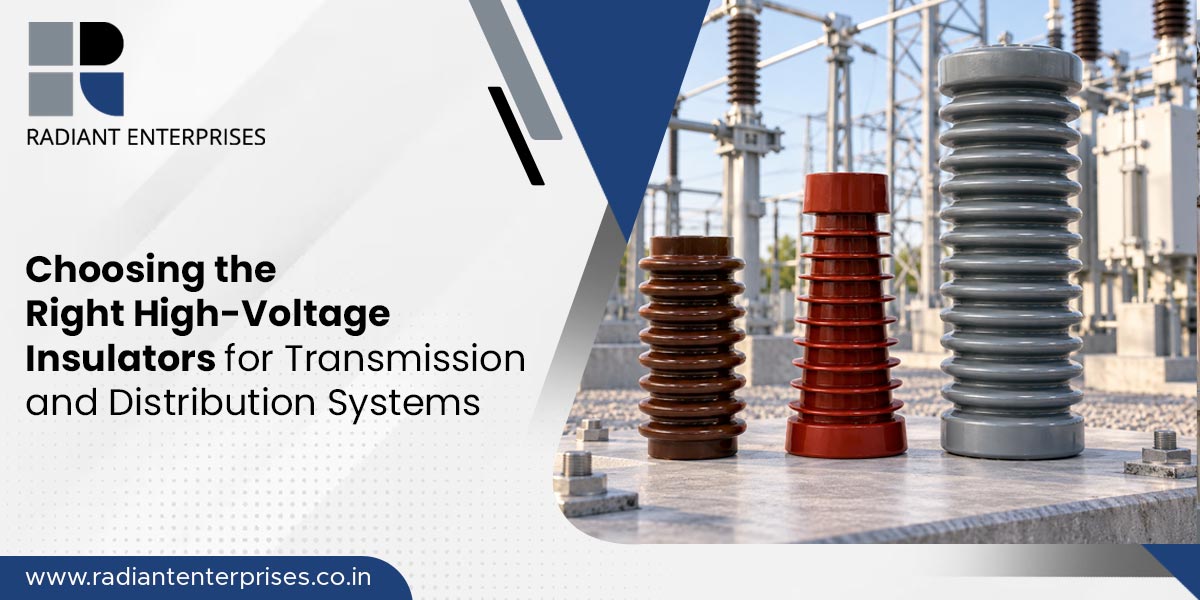
A shutdown date is getting closer, and one component still leaves you unsure. Will the insulator fit, withstand the load, and suit the site? We understand how much rests on that choice. At Radiant Enterprises, our work as an Epoxy bushing manufacturer in India starts with understanding what your equipment needs. Before discussing a product, we want to hear what’s causing concern.
Perhaps you’re replacing a damaged part or checking drawings for a new installation. You might have a familiar design but different site conditions. We believe you deserve clear answers before placing an order, without having to chase every small detail.
We begin with a simple question: where will this component sit? An overhead line, transformer terminal, and enclosed switchgear assembly place different demands on insulation. A similar shape or voltage marking doesn’t make two components interchangeable.
When supplying High-voltage insulators in Australia, we need more than the system’s usual operating voltage. We also review the highest equipment voltage, required insulation levels, and installation conditions. These details help us assess whether a proposed design belongs in your application.
At Radiant Enterprises, we encourage you to share the equipment specification before settling on dimensions. We can then discuss electrical duties alongside the available space. We also ask whether the duty involves AC or DC, since that changes the design review. It’s easier to resolve a question on a drawing than during an installation window.
- What We Need From Your Brief?
We suggest gathering these details before comparing offers:
A component can look suitable on screen while facing a very different setting on site. Coastal salt, industrial dust, moisture, and strong sunlight all deserve attention. We ask about these conditions because outdoor insulation selection must account for pollution exposure.
For our supply of High-voltage insulators in Australia, we review the actual location rather than treating every site alike. A sheltered assembly and an exposed coastal installation need separate assessments. We also want to understand access for inspection and cleaning.
At Radiant Enterprises, we include creepage distance in this discussion. This is the distance measured along an insulating surface between conductive parts. We assess it alongside material, profile, and site pollution conditions. The IEC 60815 series guides the selection of outdoor insulation exposed to pollution.
We also check clearance, which is the shortest distance through air. A longer surface path doesn’t automatically solve an inadequate air gap. We need both checks before accepting the layout.
You shouldn’t have to choose a component based on a broad material label. We look at the resin system, component shape, inserts, and expected service conditions together. We don’t assume that an epoxy design intended for enclosed equipment will suit outdoor exposure.
If you need an Epoxy resin insulator manufacturer in Australia, we support your project through our manufacturing base in India. We start with the application and drawings so the discussion stays focused on the part you need.
At Radiant Enterprises, our custom epoxy work covers applications including switchgear, transformers, and railway equipment. We use that application context to discuss component requirements, rather than treating every enquiry as the same casting.
A smooth finish alone cannot establish electrical quality. We encourage you to ask about relevant testing as well as dimensions. Partial discharge, for example, involves small electrical breakdowns within or around insulation. Persistent discharge can damage insulation over time, which makes appropriate assessment valuable.
When we discuss Transformer bushings for electricity transmission and distribution, we look beyond the visible insulating body. We review how the conductor passes through the equipment boundary and how the assembly fits. Voltage, current, temperature, and mounting requirements all belong in that conversation.
At Radiant Enterprises, we ask you to confirm conductor details, terminal connections, and the surrounding insulating medium. We also review sealing needs where relevant. A small mismatch at an interface can create avoidable fitting work and delay your schedule.
For our Transformer bushings for electricity transmission and distribution, we encourage an agreed specification before manufacture. IEC 60137 covers characteristics and tests for insulated bushings within its stated scope. We check applicability against the equipment and project requirements rather than relying on a general compliance claim.
We understand the temptation to approve a replacement because the old part looks similar. Still, photographs rarely reveal every critical dimension or rating. We would rather help resolve those gaps before dispatch.
Space can feel tight long before an assembly reaches the workshop. Busbar positions, fixing points, and neighbouring components all compete for room. We check these relationships because an insulator needs to fit the complete arrangement, not just an isolated drawing.
As a Switchgear insulator supplier in Australia, we support projects through our India-based manufacturing and export services. We ask for mounting centres, insert details, required tolerances, and load information. Clear drawings give us a useful starting point.
In our role as a Switchgear insulator supplier in Australia, we also encourage you to review installation instructions early. Mounting torque, alignment, and supported loads need agreed limits. We don’t want a correctly made component damaged by an unclear fitting method.
With our supply of Railway insulators in Australia, we first establish the exact installation point. Vehicle-mounted equipment, trackside assemblies, and traction substations do not share one set of conditions. We need that distinction before discussing a suitable component.
At Radiant Enterprises, we bring vibration, mechanical stress, weather exposure, and access into the review where relevant. We also ask about project approval requirements. Your railway specification should guide the assessment, including any applicable fire or smoke requirements.
When reviewing requirements for Railway insulators in Australia, we ask you to flag restricted maintenance windows. Difficult access makes clear inspection guidance and replacement planning more useful. We want the supply discussion to reflect the work your maintenance team will face.
We understand why a certificate can feel reassuring when deadlines are close. Yet we encourage you to check which design, rating, and test conditions the document covers. A report is useful only when it supports the component under review.
Before approval, we suggest checking:
If you’re seeking an Epoxy resin insulator manufacturer in Australia, we can discuss those requirements from our Indian manufacturing base. Clear agreements help you assess our offer with fewer unanswered questions.
At Radiant Enterprises, we approach each enquiry as an Epoxy bushing manufacturer in India with your application in mind. Share your drawings, site conditions, and concerns with us. We’ll help clarify the requirements so you can move towards an informed choice with greater confidence.
We recommend checking equipment voltage, insulation levels, mechanical loads, mounting dimensions, and site conditions. Choosing by voltage alone leaves other key requirements unchecked.
We don’t recommend outdoor use without proof of suitability. Confirm that the resin, design, and test evidence cover sunlight, moisture, pollution, and temperature changes.
We assess site pollution before choosing the material, surface profile, and creepage distance. Outdoor selection guidance links these choices to actual exposure conditions.
We assess creepage distance alongside material, profile, and site conditions. Extra surface length alone does not establish suitability for your equipment or location.
We recommend matching electrical ratings, mechanical strength, dimensions, and mounting details before replacement. A similar appearance does not confirm that a component is interchangeable.
We need your drawings, voltage requirements, loads, quantity, and installation conditions. Include required standards and test records so our quotation reflects your actual needs.
We suggest requesting relevant type-test reports, routine test records, and agreed acceptance limits. Check that the evidence covers your bushing’s design, rating, and applicable standard.
We check partial discharge requirements because small electrical breakdowns can damage insulation over time. Relevant testing helps assess weaknesses that surface checks cannot reveal.
We include altitude in the design review because reduced air density affects external insulation. Required corrections depend on the equipment, insulation design, and applicable standards.
We don’t assume an AC-rated insulator suits DC service. We review the electrical duty and pollution requirements before confirming suitability for your system.
We recommend checking approved drawings, mounting centres, insert threads, clearances, and torque instructions before delivery. Resolving these details early helps prevent avoidable assembly delays.
At Radiant Enterprises, we manufacture custom epoxy components for switchgear, transformers, and railway equipment. Share your drawings and service requirements so we can assess your needs.