
Fill all information details to consult with us to get services from us
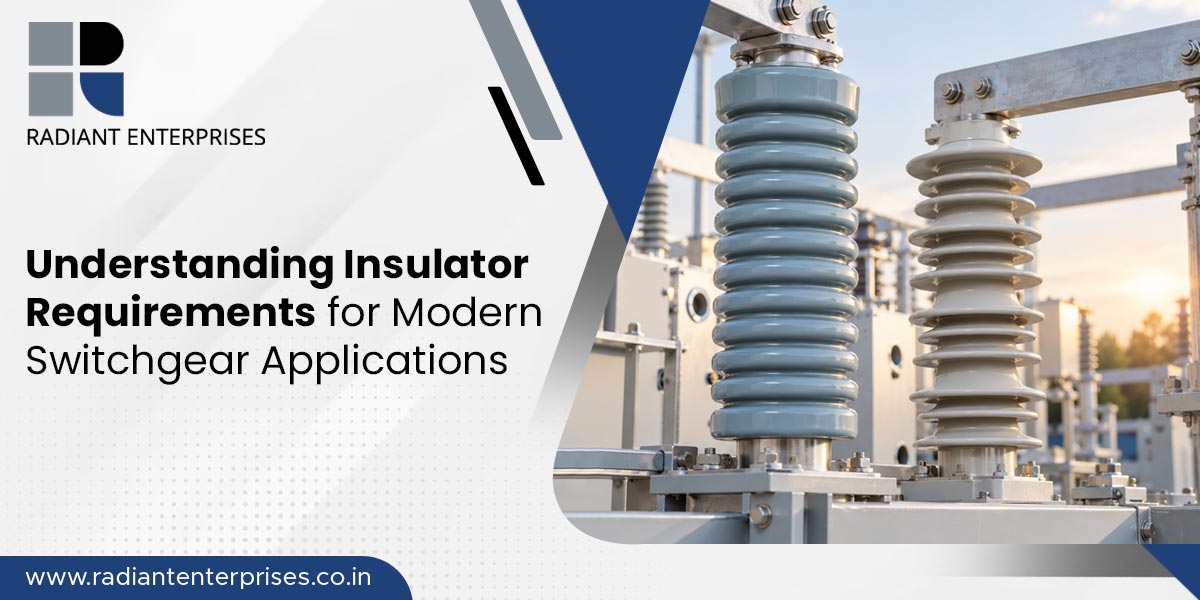
A switchgear project can look ready until one small component raises a question nobody wants near the deadline. Will this insulator fit, handle the duty, and remain dependable after installation? At Radiant Enterprises, we understand the pressure behind those questions. When you compare the Best insulator manufacturers in India, you need more than a neat product photograph. You need clear answers that help you move forward without carrying doubts into the next stage.
We know an insulator is only one part of your assembly. Yet choosing it affects the space, support, and electrical separation within your equipment. Our role as a manufacturer and supplier is to help you match those needs with a suitable component. That conversation starts with how your switchgear will work.
A drawing gives us dimensions, but your site adds the details that shape a sound choice. Is the panel indoors? Does the room face damp mornings, heavy dust, or wide temperature changes? As an Industrial insulator manufacturer for utilities, we want those details early. A component selected for one setting should never be assumed suitable for every other setting.
At Radiant Enterprises, we encourage you to describe the actual working conditions, including anything that seems unusual. A sheltered enclosure can still face moisture, contamination, or poor ventilation. Switchgear standards account for service conditions because the setting matters to equipment selection. We need to understand your site before settling the specification.
You don’t need a perfect brief before starting a discussion. We can begin with the information available and identify the gaps together. Useful starting details include:
It’s natural to look at voltage first when comparing insulators. We start there too, but we also need the required withstand levels and the complete assembly arrangement. With enquiries for High-voltage insulators for sale in the USA, our discussion should cover the project specification before moving towards a product choice. A matching voltage label alone does not settle suitability.
We also need to separate the system’s normal operating voltage from the electrical stresses covered by its insulation design. Temporary overvoltages and impulse requirements belong in the engineering review. You shouldn’t have to guess which rating applies. We can work from the approved specification and agree on the evidence needed for your application.
- Why Space Around the Insulator Matters?
When working as your Custom electrical insulator manufacturer, we look beyond the outside dimensions. Clearance is the shortest distance through air between conductive parts. Creepage is the shortest path along an insulating surface between conductive parts. We assess both because surface contamination and the surrounding arrangement affect insulation requirements. These distances serve different purposes and need separate checks.
At Radiant Enterprises, we approach a compact design with that distinction in mind. Saving panel space is useful, but a smaller component must still meet the agreed electrical and mechanical needs. We need to consider nearby metalwork, conductor positions, and mounting hardware together. Otherwise, a component that fits the drawing may create problems within the assembly.
Have you ever reached assembly and found that a seemingly minor mismatch stopped the work? A misplaced insert or incorrect mounting height can hold up far more than one fitting operation. For enquiries seeking a Switchgear insulator manufacturer in the USA, we bring the discussion back to those practical details. Our manufacturing base is in India, and your project requirements guide the supply discussion.
We must also consider the forces acting on the support. Conductor weight, assembly loads, vibration, and short-circuit forces deserve attention during design review. At Radiant Enterprises, we encourage you to share loading details alongside dimensions. We don’t want a component chosen only because its shape resembles an existing part.
- Our review should cover these details before production begins:
Two insulators can look similar while having different material properties and service limits. As a Power transmission insulator supplier in the USA for agreed project requirements, we need to distinguish switchgear components from insulation used elsewhere in the network. We should never treat every electrical support as interchangeable simply because the dimensions appear close.
For an epoxy component, we consider the material system alongside the required electrical, thermal, and mechanical performance. We also need agreed controls for casting quality and the finished part. A smooth surface is useful to inspect, but appearance alone cannot confirm internal quality. We need the right checks for the design and duty.
As your Custom electrical insulator manufacturer, we see customisation as more than changing a hole or adding height. We need to understand why the change is required. A revised insert position can affect wall thickness, stress, and assembly access. Looking at those connections early helps us avoid solving one fitting problem while creating another.
A test report should help you make a decision, not leave you searching for what was tested. At Radiant Enterprises, we believe the drawing, component identity, test conditions, and acceptance criteria should connect clearly. If you’re comparing the Best insulator manufacturers in India, ask how the supplied evidence relates to your proposed component.
We should agree on the inspection and test plan before production. Depending on the design and specification, checks can include dimensions, visual condition, electrical withstand, and mechanical performance. Partial discharge testing may also form part of the agreed requirements. We must distinguish component checks from complete switchgear tests; one does not automatically replace the other.
For our role as an Industrial insulator manufacturer for utilities, clear records matter alongside the physical component. We want you to know which drawing revision was used and what inspection requirements were agreed. That clarity supports incoming checks, repeat orders, and discussions when something changes. It also reduces avoidable back-and-forth when your schedule is already tight.
When handling enquiries for High-voltage insulators for sale in the USA, we also need to clarify packing, identification, quantities, and delivery expectations. At Radiant Enterprises, we want the handover to support your receiving and assembly teams. A suitable component still needs protection in transit and clear identification when it reaches your stores.
If your brief calls for a Switchgear insulator manufacturer in the USA, tell us whether local manufacture is mandatory. We can then assess the fit of our India-based supply against your purchasing requirements. Clear sourcing terms prevent confusion later.
Our work as a Power transmission insulator supplier in the USA begins with understanding the component you need. Bring your drawing, service conditions, and unresolved questions to Radiant Enterprises. We can discuss the requirements, identify missing details, and define the next step together. You deserve a clear basis for your choice, especially when the rest of your project depends on getting that choice right.
We check rated voltage, insulation levels, mechanical loads, mounting dimensions, and site conditions. Your approved switchgear specification should guide the choice, rather than appearance alone.
No. We also need to match withstand levels, mounting details, material properties, and mechanical strength. A similar voltage rating does not make components interchangeable.
We assess creepage along the insulating surface and clearance through air between conductive parts. Both distances help prevent electrical breakdown and require separate design checks.
We should only use an indoor insulator outdoors if its design is approved for those conditions. Rain, sunlight, and contamination require a separate suitability review.
Moisture combined with surface contamination can weaken insulation and encourage discharge. We recommend checking condensation control and following the equipment maker’s cleaning and maintenance guidance.
We recommend a custom design when standard parts cannot meet mounting, space, electrical, or load requirements. At Radiant Enterprises, your drawings help guide that discussion.
A smaller insulator can save space, but we must verify electrical distances, strength, and assembly access. Reducing dimensions alone does not confirm a suitable design.
We recommend requesting reports linked to the supplied design, with clear test conditions and acceptance criteria. Required checks depend on your specification and applicable standards.
No. We treat component testing and complete assembly testing separately. Your finished switchgear must meet the relevant requirements for its design, ratings, and intended use.
Cracks, tracking marks, discolouration, or damaged supports need prompt assessment. We recommend inspection by qualified personnel after safe isolation, following the equipment maker’s instructions.
We follow the equipment maker’s maintenance schedule and adjust for site conditions. Dust, dampness, and signs of deterioration can justify more frequent checks.
Share drawings, quantities, voltage ratings, load requirements, site conditions, and required tests. At Radiant Enterprises, we use these details to clarify your needs before quoting.